
How to Feed Hay Cubes
Feeding hay cubes is straightforward, but there are a few things worth knowing — especially if you're switching from traditional baled hay. This guide covers the basics: how to portion, when to soak, how to transition, and what to watch for across different animals.
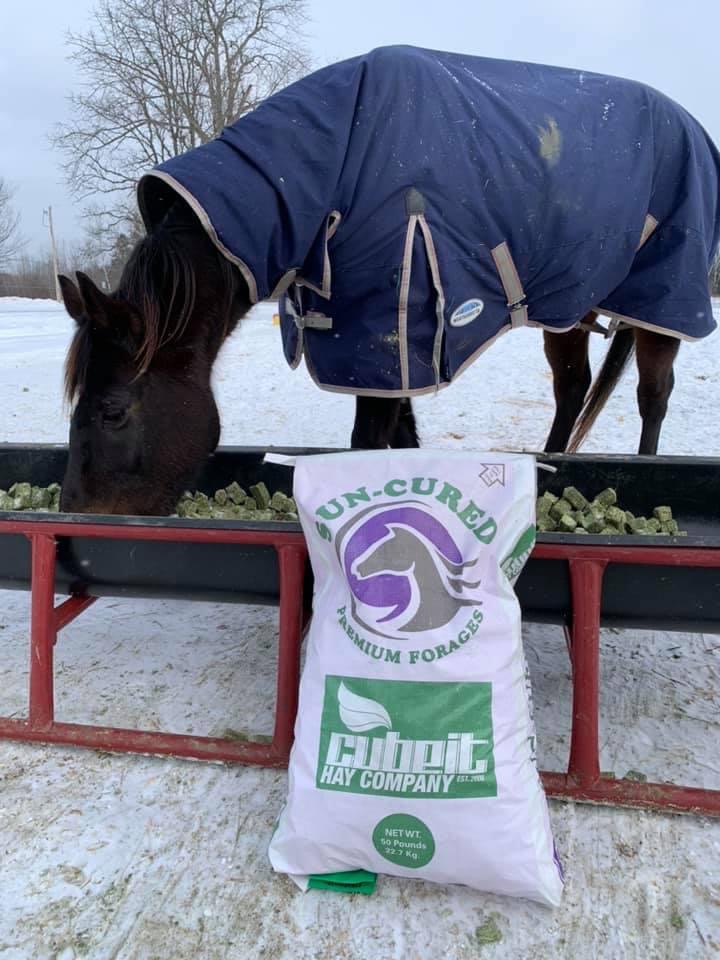
Feeding Basics
Hay cubes can be fed in a feeder, trough, hay net, or directly on clean ground. The key difference from baled hay is density — cubes weigh more per volume than flakes, so feed by weight rather than by eye. A kitchen or hanging scale is helpful when dialing in portions for the first time. Most animals eat cubes readily without any special introduction, but start with smaller amounts if your animals haven't seen cubes before.
Soaking and Hydration
Soaking cubes in water is optional for most animals but useful in specific situations. For senior horses or animals with dental challenges, soak mini cubes in water for 15–30 minutes to create a soft mash. Soaking also slows down fast eaters, adds moisture to the diet in dry climates, and can make cubes more palatable for picky animals. Full-size cubes for cattle and large livestock generally don't need soaking — cattle handle the dense format without issues.
Transitioning from Baled Hay
If your animals are accustomed to baled hay, transition gradually over 7–10 days. Start by offering cubes alongside their current hay, increasing the proportion of cubes each day. This gives the animals time to adapt to the new format and lets their digestive system adjust. Most horses and cattle take to cubes within a few days. Watch for any changes in manure consistency during the transition and adjust the pace accordingly.
Matching the Cube to the Animal
Full-size cubes are the standard for cattle and adult horses. Mini cubes work well for senior horses, goats, sheep, and animals that need a smaller or softer format. Pellets are ideal for small animals like rabbits, automated feeders, and situations where you want a measured ration. Not every blend suits every animal equally — match the protein level and forage type to the animal's needs, workload, and production stage.
Water and General Feeding Tips
Always provide fresh, clean water when feeding hay cubes. Cubes are dry and dense, and adequate hydration is important for proper digestion. Feed consistent amounts at regular intervals rather than large infrequent meals. If you're feeding cubes in a pasture setting, distribute them across the feeding area to reduce competition and encourage natural foraging movement.
Frequently Asked Questions
Related Pages
Ready to try CubeIt Hay?
Find an authorized CubeIt Hay dealer near you, or contact us directly to discuss your needs.