
Hay Cubes vs Bales: A Complete Comparison
Horse owners and ranchers often ask whether compressed hay cubes are better than traditional bales. The short answer: they're the same forage, packaged differently. But those packaging differences can make a real impact on dust, waste, storage, and feeding convenience.
Nutrition: Same Hay, Different Form
Hay cubes are made from the same forage — alfalfa, timothy, oat, orchard grass — as traditional bales. The compression process doesn't add or remove nutrients. The key difference is consistency: every cube from a batch has the same nutrient profile, while individual flakes from a bale can vary in leaf-to-stem ratio, moisture, and quality.
Dust Comparison
This is where cubes have a clear advantage. The compression process binds fine particles together, reducing the airborne dust released during feeding. For horses with respiratory sensitivities or any dust-sensitive animals, cubes are a meaningful improvement over traditional bales. Barn air quality improves noticeably when switching from bales to cubes.
Waste Comparison
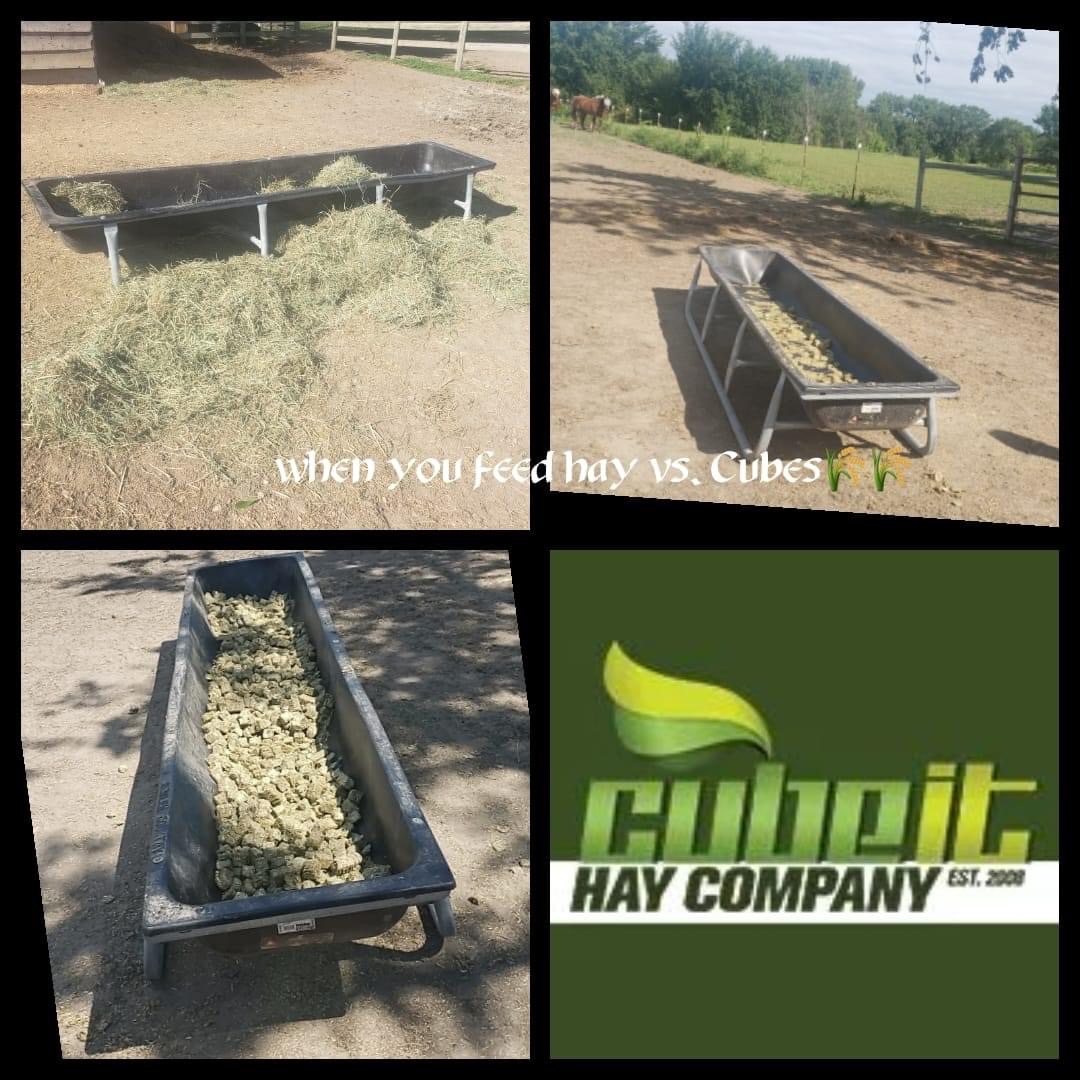
Traditional bales, especially when ground-fed, result in substantial waste — hay gets trampled, scattered by wind, soiled, and selectively sorted by animals. Cubes are dense and compact. Animals pick them up cleanly and eat them more completely. Many operations report noticeably less waste when switching to cubes, which can offset the per-ton price difference.
Storage and Handling Comparison
Cubed hay stores more compactly per unit of nutrition than bales. Cubes stack neatly on pallets, resist weather better than loose bales, and are easier to handle for one person. A bag of cubes is simpler to carry than a heavy bale, and there's no twine or wrap to deal with. Bales require more covered storage space and are harder to transport in small quantities.
Transport and Convenience
Cubes ship efficiently on pallets and are easy to load into a truck bed, trailer, or barn. There's no string to cut, no flakes to separate, and no mess to sweep up after feeding. For operations that haul feed to remote pastures or travel with horses, cubes are significantly more convenient than bales.
Cost Considerations
Cubes typically cost more per ton at the point of purchase than locally sourced baled hay. However, when you factor in reduced waste, eliminated spoilage, lower storage costs, and reduced labor for feeding, many operations find that the total cost of feeding cubes is comparable to — or even less than — traditional bales. The math depends on your operation's specific waste rates and hay costs.
Frequently Asked Questions
Related Pages
Ready to try CubeIt Hay?
Find an authorized CubeIt Hay dealer near you, or contact us directly to discuss your needs.